The Asquith Family: Power, Passion, and Tragedy
The Asquith family saga is defined by the rise of Herbert Henry Asquith from a modest Yorkshire background to the Premiership of Great Britain [1], his two very different marriages, and the impact of the First World War on his brilliant children. After the death of his first wife, Helen, Asquith married the flamboyant and extravagant Margot Tennant, thrusting the family into a high-society world of 'Souls' and 'Coteries' [2], [3]. The family resided at 10 Downing Street during a tumultuous era of Suffragettes, the Irish Home Rule crisis, and the outbreak of the Great War [4], [5]. The war brought devastation to the family. Asquith's premiership was marked by his intense emotional dependence on Venetia Stanley, to whom he wrote constantly, even sharing state secrets [6], [7]. The conflict claimed the life of his eldest and most brilliant son, Raymond, who was killed on the Somme in 1916 [8], and left his son 'Beb' with shell shock and his son 'Oc' an amputee [9], [10]. Following the formation of a coalition government and political maneuvering by Lloyd George, Asquith was ousted from power in December 1916, ending an era for the family and the Liberal Party [11].
The Asquith family
Introducing the asquith family members and their dynamics that shaped the prime minister's world.
Character Perspectives(How each character saw that)

H.H. Asquith
Prime Minister (1908–1916) and Patriarch — A brilliant Balliol scholar and lawyer who rose to lead the Liberal Party [12], [1]. Known for his intellectual arrogance and a 'slight weakness for the companionship of clever and attractive women' [13], he struggled to balance the demands of a world war with his obsessive need for female confidantes [14].
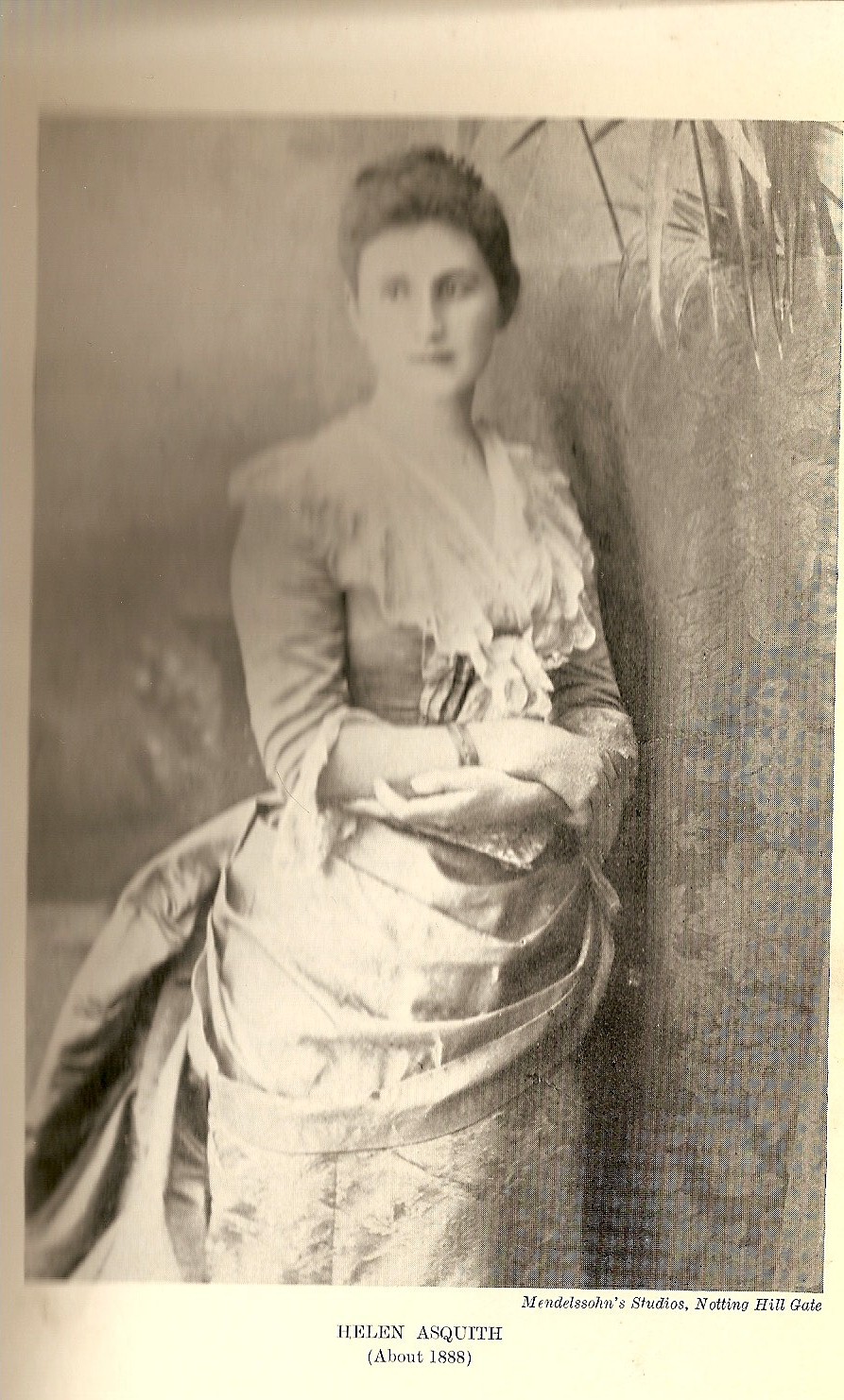
Helen Asquith
First Wife — Asquith's first love, described as 'an angel from Heaven' who possessed a selfless and unworldly character. She died of typhoid in 1891, leaving Asquith with five young children [15], [16].

Margot Asquith
Second Wife — The daughter of a wealthy industrialist, she was known for her wit, extravagance, and lack of inhibition [17], [18]. While she pushed Asquith socially, she struggled with the role of stepmother and was often at odds with her stepchildren [19], [20]. She fiercely defended her husband against his political enemies [21].

Raymond Asquith
Eldest Son — Considered the most brilliant of his generation, he was a scholar of Winchester and Balliol and a Fellow of All Souls [22], [23]. Cynical and dashing, he was a central figure of 'The Coterie' [24]. He was killed in action on September 15, 1916, a blow from which his father never fully recovered [8], [25].

Herbert 'Beb' Asquith
Second Son — A poet and lawyer who married Lady Cynthia Charteris [22]. He served in the artillery during the war and suffered from shell shock, later writing novels [9], [26].

Arthur 'Oc' Asquith
Third Son — A brave soldier who served with the Royal Naval Division at Gallipoli and the Western Front [27]. He was wounded four times, eventually losing a leg, and was known for his 'rare and very lovely nature' [28], [10].

Violet Asquith
Eldest Daughter — Fiercely devoted to her father and his political career, she possessed a 'first-rate masculine mind' according to H.H.A [29]. She was Asquith's close companion until her marriage to his private secretary, Maurice 'Bongie' Bonham Carter [27], [30].

Cyril 'Cys' Asquith
Fourth Son — A brilliant scholar who won top Classical scholarships at Oxford. He later became a Lord of Appeal in Ordinary [31], [32], [33].

Elizabeth Asquith
Daughter (by Margot) — Precocious and literary, she wrote plays and novels. She married the Romanian Prince Antoine Bibesco in 1919 [31], [34].

Anthony 'Puffin' Asquith
Youngest Son (by Margot) — A musical and artistic child who became a celebrated film director [31], [35].
Fun Fact
During the intense pressure of the opening months of World War I, Prime Minister Asquith found solace in writing constantly to Venetia Stanley, often during Cabinet meetings. In August 1914 alone, he sent her 45 letters, and over the course of their correspondence, he shared high-level military secrets, including the destination of the B.E.F., purely for emotional relief [36], [7].